
Dec
Rings, Vintage Jewellery
Rings Your Way: Stacked, Solo or Somewhere in Between
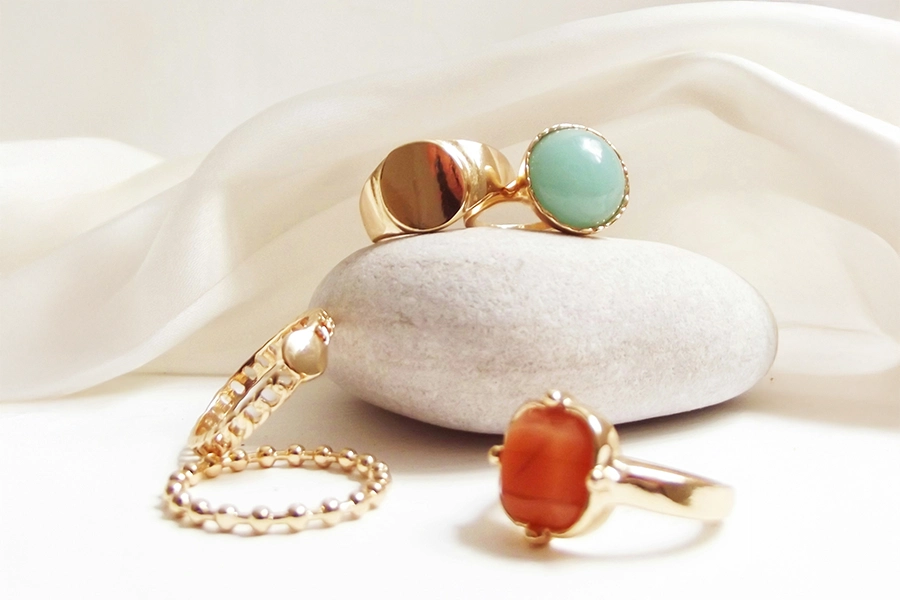
Stacked rings are everywhere at the minute. You see them on Instagram, in magazines and very likely on the hands of people you know. Done well, a stack looks easy and relaxed. Done badly, it can feel cluttered, uncomfortable or as if every ring is shouting at once.
If you like the idea but are not sure where to start, this is the calm version of what we talk through in the shop. It will help you build a stack that feels like you, using pieces you will actually wear. Along the way we will mention the kind of rings you will find in our rings collection and in our silver, gold, vintage and antique sections, so you can picture how they might work together on your own hands.
What do we mean by “stacking rings”?
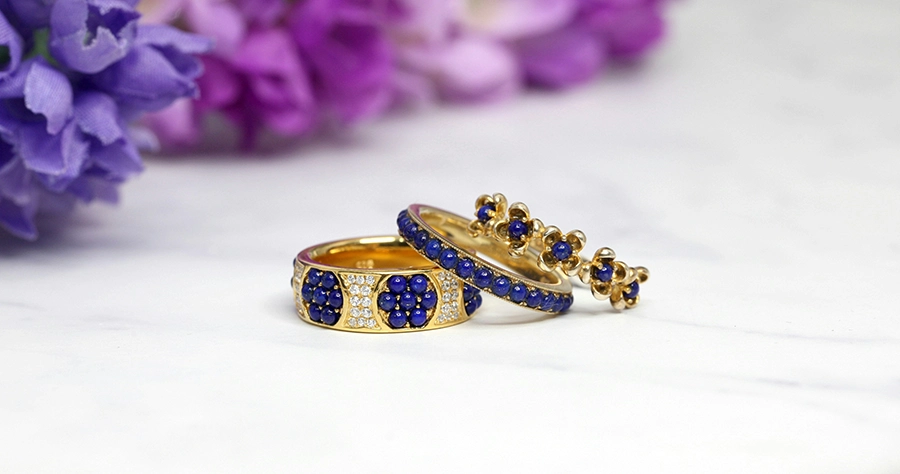
Stacking simply means wearing more than one ring together in a way that looks deliberate. That might be:
- two or three slim bands on the same finger
- a favourite statement ring with a couple of simple ones alongside it
- a mix of plain, textured and stone set rings spread across several fingers
You do not need to buy a ready made “stacking set” for it to work. Some of the nicest stacks grow slowly over time from rings you already have: a silver band, a yellow gold wedding ring, a vintage diamond ring you love and an antique piece with a bit of detail.
Our silver rings, yellow gold rings and vintage rings are good places to browse if you want to see the sort of shapes and widths that lend themselves to stacking.
Start with one hand (and one finger)
If you are not used to wearing many rings, it can feel odd to suddenly cover every finger. Start smaller and let your eye, and your hands, get used to it.
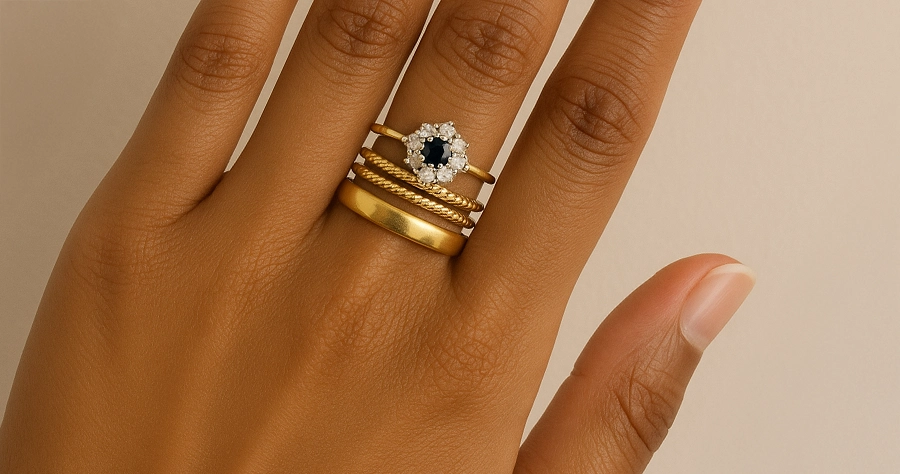
A good first step is to choose one hand and one finger, often the middle or ring finger, and put together just two or three slim bands. You might mix:
- one plain band
- one patterned or engraved band
- one narrow ring with small stones
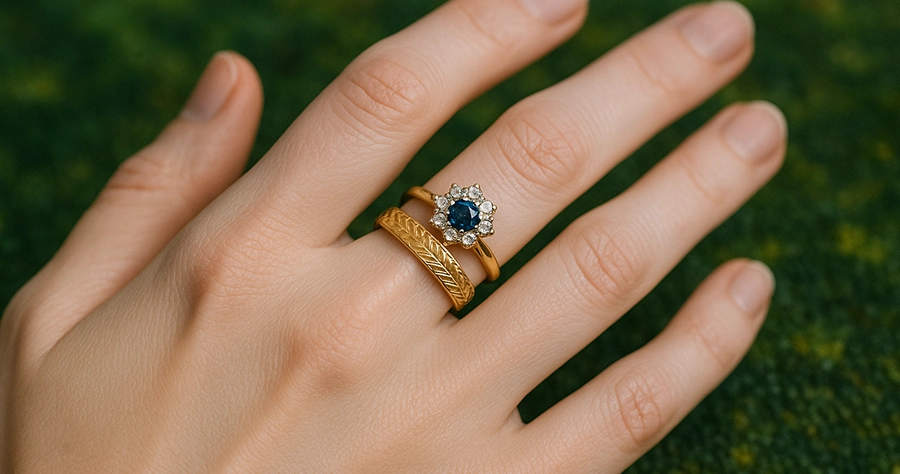
A classic example of a “base” ring for this is a simple gold band. Something like our Antique 22ct Gold Wedding Band Ring 3mm dated 1915 has enough presence to hold its own, but is slim and smooth enough to sit happily with other pieces.
Once that feels normal, you can add another ring on a different finger on the same hand. The idea is that you build up gradually rather than jumping straight to a full hand of rings and then feeling overwhelmed.
Balancing “hero” rings and supporting bands
Most good stacks have one or two “hero” rings and a few quieter ones that support them. If every ring is big, chunky or highly detailed, the overall effect can quickly turn busy.
Your “hero” ring might be a vintage or antique diamond piece, or a signet ring you wear every day.
- Let that ring be the star.
- Use simple bands either side of it, or on neighbouring fingers, to frame it.
For example, an antique signet like our Antique 9ct Rose Gold Shield Signet Ring works well as a centrepiece. It looks good on its own, but you can soften and support it with one or two slim bands from our gold rings or silver rings sections on nearby fingers so the signet still feels like the main event.
A diamond ring from our diamond rings category can do the same job: it becomes the focal point, while plain bands sit quietly around it and stop everything looking bare.
Think of it a bit like getting dressed. If the top is loud, keep the trousers simple. If the ring is loud, let the bands around it be calmer.
Mixing metals: can you wear gold and silver together?
Short answer: yes, you can.
Mixing metals only tends to look odd when there is one lonely silver ring in a sea of gold, or the other way round. If you repeat each metal at least once, it starts to look like a choice rather than an accident.
A few easy ways to mix metals:
- wear mostly gold on one hand and mostly silver on the other
- keep a yellow gold “hero” ring on one finger and echo gold with a slim band on another finger, then add silver on the opposite hand
- use rose gold rings as a softer bridge between yellow gold and silver
The main thing is repetition. If you include each metal more than once, the stack reads as intentional and cohesive.
Playing with shapes and textures
Stacks are more interesting when not every ring is the same width and finish. You can play with:
- a plain polished band
- a twisted, engraved or patterned band
- a ring with a milgrain edge
- a slim stone set band
- a slightly chunkier signet
Older pieces from our vintage rings and antique rings often bring in detail that lifts a simple stack: engraved shoulders, unusual profiles, old cut stones and interesting band shapes.
If one ring has a very straight, flat profile, try pairing it with a slightly curved or shaped band. If one ring is heavily patterned, sit something smooth next to it to give the eye a rest.
Another nice example of texture is a patterned band such as our Vintage 9ct Gold Leaf Band Ring. On its own it has enough interest to be noticed. In a stack, it adds a bit of pattern between simpler bands without stealing the whole show.
How many rings is “too many”?
There is no hard rule; it comes down to comfort and balance.
If you are new to stacking, two or three rings on one hand is often enough. Many people like one hand to be the “stacking hand” and keep the other hand simpler with just one or two rings.
If you already love rings and wear them all the time, you might end up with something on most fingers. As long as your hands still move comfortably, nothing is digging in and you are not constantly catching on pockets and bags, you are probably fine.
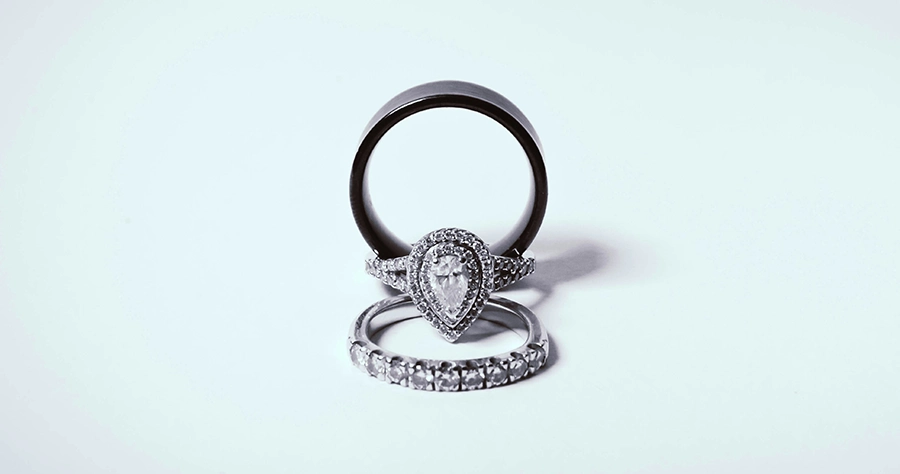
If you wear an engagement ring and wedding ring, you might:
- keep that hand mostly as it is and build stacks on the other hand
- use slim silver or gold bands to frame the engagement ring without overwhelming it
You can see different band widths and shapes in our wedding rings and general rings sections if you want to visualise how full or minimal you would like things to look.
Sizing and comfort when stacking
Fit matters more when you stack. Two rings in the same size on one finger usually feel tighter together than they do on their own, particularly if one of them is wide.
A few tips:
- have one ring that fits snugly at the base of the finger and another that is a touch looser to sit just above it
- remember that wide bands often feel about half a size smaller than slim bands
- avoid putting several very wide rings together on a single finger
When you are buying with stacking in mind, pay attention to widths and shapes as well as the size. On our site we list UK ring sizes and measurements on each product page, so you can get a feel for how a new piece might sit with rings you already own.
Looking after stacked rings
When you stack, rings will naturally knock against each other a little as you move. That is normal, but you can minimise wear.
- Try not to place a very sharp or heavily set ring directly next to a very soft, plain band.
- Take your rings off for heavier DIY, gym sessions and strong cleaning products.
- Store them separately, or in little pouches, rather than all jumbled together in a box.
Vintage and antique pieces especially appreciate that extra bit of care. They can be surprisingly sturdy, but they have already done more years of wear than a brand new ring.
Using vintage, antique and pre-owned rings in a stack
Some of the most characterful stacks are a mix of eras. A vintage diamond ring can look great flanked by two modern plain bands. An antique wedding band might sit perfectly alongside a more recent signet. A pre-owned high street or designer ring can sit happily with both.
Because so many of the rings we stock are one offs, especially in vintage rings, antique rings and silver rings, you can build a stack nobody else has.
If you like the idea of a softer, more romantic stack, something like our Vintage 9ct Rose Gold Wedding Band Ring 4mm has the right mix of warmth and simplicity. It was originally made as a wedding ring, but it works just as well as part of a rose gold stack with a signet or a stone set piece above it.
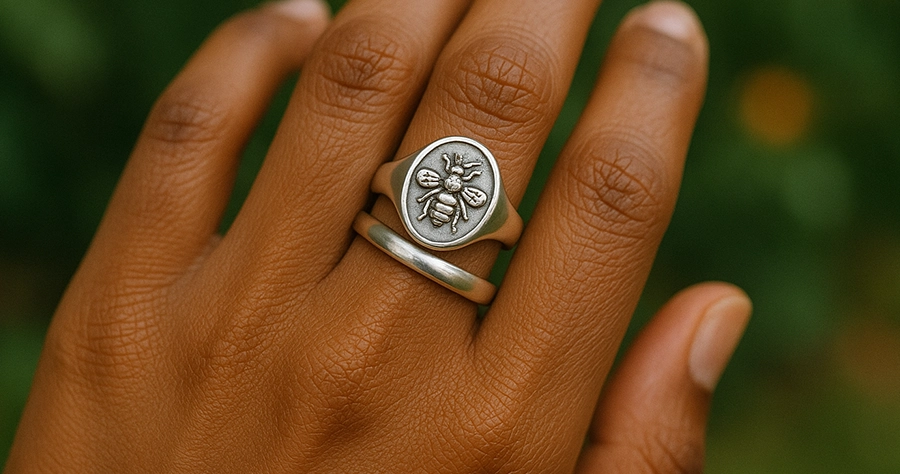
On the cooler side, a piece such as the Solid Sterling Silver Bee Signet sits nicely with slimmer bands and adds a focal point without feeling too formal.
Finding your own way to wear rings
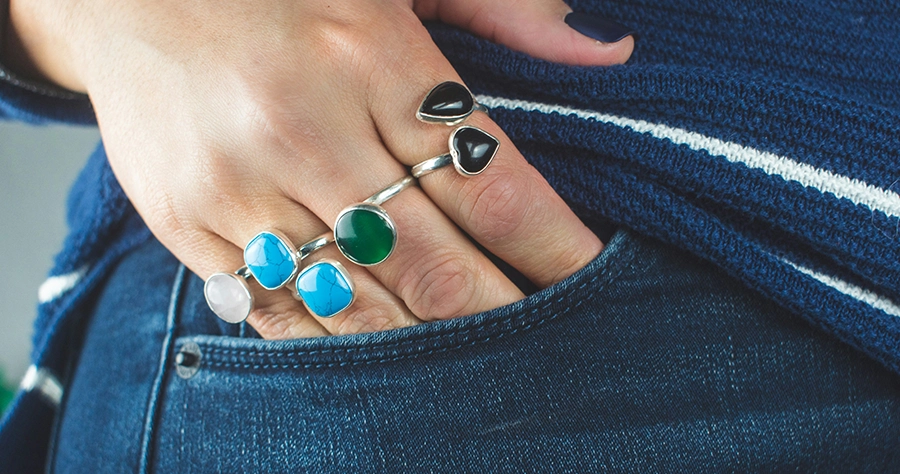
There is no single correct way to stack rings. Some people like neat combinations that hardly move; others are happiest with a hand full of mixed metals, shapes and stones.
A simple approach is to:
- start with one hand and two or three rings
- add or remove pieces until it looks and feels balanced
- notice which combinations you actually reach for most mornings
Over time, you will end up with a few “go to” stacks that feel like your style rather than something copied from a picture.
If you are unsure whether certain rings will sit comfortably together, or you would like an honest opinion on which pieces from our rings, silver rings, yellow gold rings or vintage rings might work in a stack, you are always welcome to ask. We see these combinations tried on in the Stockport shop every week and are happy to help you build something that feels like you, whether that is one perfect ring on its own or a small, well chosen stack you wear every day.
